

First, the good news, not all ticks carry disease-causing organisms. Unfortunately, you won’t be able to tell which ones are carriers just by looking at them. Additionally, only blacklegged ticks transmit Lyme disease bacteria, but each other type of tick carries its own type of disease-causing agents, and risk for disease from infected tick bites varies greatly. It depends on the type of pathogen, how long the tick was feeding, and even the immune status of the tick-bite victim. Doing full body tick checks every day can help find all of the ticks that may be attached and feeding.
For blacklegged ticks (Ixodes scapularis) in the northeastern and upper mid-western regions, generally, 15-20% of nymphs and 50% or more of adult females are infected with Lyme disease spirochetes and risk for infection increases the longer the tick is attached and feeding. Western blacklegged ticks also transmit the Lyme germ along with several other bacteria and parasites that can make you sick but typically <5% of those ticks are carrying germs. Infection prevalence for these other pathogens (Anaplasma, Babesia, Borrelia miyamotoi, Powassan virus) are typically lower and vary by region.
If you’ve encountered another type of tick, like the Lone Star tick, American dog tick, wood tick, Gulf Coast tick, or Pacific Coast tick, they may be infected with their own associated pathogens but they do not transmit Lyme disease bacteria. For peace of mind and for guiding next steps, you may want to test those ticks, too.
Tick testing is not a substitute for physician diagnosis of disease but it can be a useful aid in deciding whether or not to treat in the absence of disease symptoms. Remember, that just because the tick test is positive does not mean that germs were transmitted.
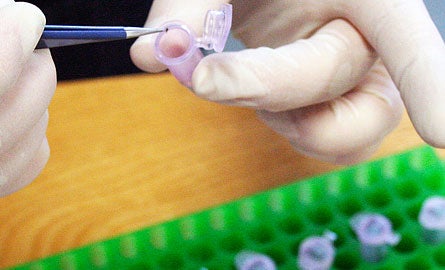
Most tick testing involves amplification of pathogen specific DNA using a polymerase chain reaction (PCR) assay. Typically, ticks are submitted for testing by placing them in a sealed zip-lock bag and sending via overnight or priority carrier or UPS. Most of the companies ask that you send the tick in along with your name, address, phone number (with area code), and payment. You may want to check with the lab for any additional specifics.